

As an Amazon Associate, I earn from qualifying purchases. Prices and availability are accurate as of the publish date below and are subject to change — always check Amazon for current pricing before buying.
Published: 13/09/2026
The most expensive Pokemon cards ever sold have reached numbers that sound more like real estate than trading cards. One single card recently sold for over $16 million — more than some paintings, more than most houses. Here’s a look at the sales that reset what “valuable” means in this hobby, and what actually drives prices that high.
Quick List
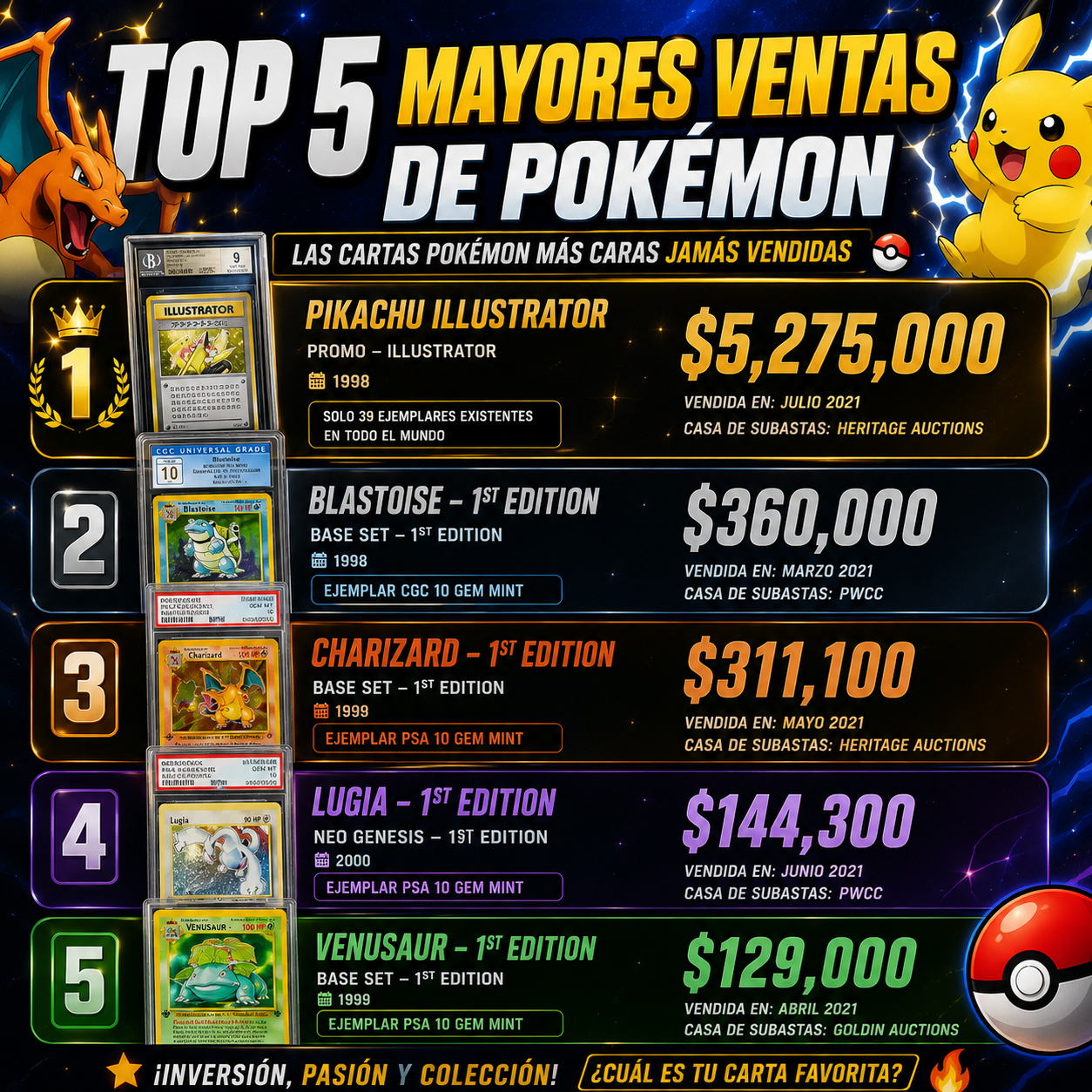
- Pikachu Illustrator (PSA 10) — $16,492,000
- Trophy Pikachu No. 1 Trainer (Gold) — $3,000,000
- Base Set Shadowless Charizard (high grade) — a long-running collector favorite
- Modern secret rares and alt-arts — smaller but fast-growing values
- What actually makes a Pokemon card this valuable
1. Pikachu Illustrator — $16,492,000
In February 2026, a PSA Gem Mint 10 Pikachu Illustrator sold at Goldin Auctions for $16,492,000, after 41 days of bidding and 97 offers. The seller, Logan Paul, had originally bought the same card privately in 2021 for $5.275 million — meaning it more than tripled in value in under five years. The sale was certified by a Guinness World Records judge as both the most expensive Pokemon card and the most expensive trading card of any kind ever sold at auction.
What makes this specific card so extreme is its extreme scarcity: only around 39 copies were ever distributed, as prizes across three 1997–1998 CoroCoro Comic illustration contests in Japan, and only one has ever been graded a perfect PSA 10.
2. Trophy Pikachu No. 1 Trainer (Gold) — $3,000,000
Sitting well behind the Illustrator but still enormous by any normal standard, this trophy card — awarded to top-ranking players rather than sold in packs — sold for $3 million on eBay in 2025. Trophy cards like this one are valuable partly because they were never available to the general public, only handed out as tournament prizes in extremely limited numbers.
3. Base Set Shadowless Charizard
Long before the Pikachu Illustrator reset the record books, the Base Set Shadowless Charizard was the card every collector talked about. It doesn’t hold the all-time record anymore, but high-grade copies still command serious money, and its cultural status as “the” iconic Pokemon card hasn’t faded.
4. Modern Secret Rares and Alt-Arts
Not every valuable card is decades old. Recent special illustration rares and secret rares from current sets have seen fast, sometimes dramatic price jumps in the weeks after release, driven by hype, low print numbers relative to demand, and social media exposure. These are a completely different category from vintage trophy cards — more volatile, and far less predictable long-term.
5. What Actually Makes a Pokemon Card This Valuable
Across every card on this list, a few factors keep showing up:
- Extreme scarcity — low original print runs, especially contest or trophy cards
- Grading — a PSA 10 can be worth many times more than the same card in PSA 8 or 9 condition
- Historical significance — being the “first” or most iconic version of a card matters to collectors
- Provenance — who owned it, and the story behind the sale, genuinely affects final price
A Word of Caution
These headline sales make for great stories, but they’re the extreme outliers of the hobby, not a typical outcome. The vast majority of Pokemon cards — even rare ones — will never come close to these prices. This article is for entertainment and market awareness, not investment advice; card values can rise or fall unpredictably, and past sales are never a guarantee of future value.
For verified details on the record sale, see the Guinness World Records entry.
Protect What You Pull
Whether you’re sitting on a modern chase card or a vintage find, proper protection matters from day one. See our guide to the best Pokemon TCG sleeves and deck boxes to keep your cards in sellable condition.
Final Thoughts
The Pikachu Illustrator’s $16.49 million sale rewrote the ceiling for the entire hobby, but it’s the exception, not the rule. Most collectors will never own — or need to own — a card anywhere near that value to enjoy the game and the community around it.